Transformers Rescue Bots: Hero
- 4.5
- Rating
- 10.00M
- Installs
- Free
- Price
 Analysis by App-foxy
What makes Transformers Rescue Bots: Hero stand out to me is its focus on rescue as an active task rather than simple robot fighting. I spent my time putting out fires, dealing with avalanches, and helping civilians, and that changes the mood completely. The game feels built around quick decisions and visible results: something is going wrong, I choose the right rescue response, and the situation becomes safer. For children who already enjoy Transformers, that is a much more approachable way to enter an adventure game than constant combat.
Developed by Budge Studios, this free adventure game is aimed at Everyone, with a straightforward presentation that younger players can understand quickly. It has been available since May 5, 2016, and its current version is 2026.1.1, while devices need at least Android 5.1. The large audience is easy to understand: it has passed 10 million installs, carries a 4.5 average from around 72 thousand ratings, and has about 1.3 thousand written reviews. Those figures suggest a well-established children’s title, although popularity alone does not make it suitable for every family.
Rescue is the central capability, not a side activity
I like that the game makes the rescue itself the point: each emergency asks the player to notice what is happening before choosing how to help. In this section, I’ll look at how that clear purpose supports the early goals, then consider what signals progress and keeps the missions moving.
You May Also Like

 Blood Strike: 2.5 Anniversary
Blood Strike’s Loadouts Turn Every Drop Into a Tactical Gamble
A close look at Blood Strike’s custom loadouts: how fast access to signature weapons reshapes its battle royale rhythm, rewards preparation, and narrows the gap between fights.

 Pandora - Music & Podcasts
Pandora’s Music Is Easy to Start, but Harder to Recover
Pandora’s strength is its low-effort path from a seed to a station. Its weak spot is how much confidence it asks you to place in connection, setup, and quiet recovery.

 8 Ball Pool
 Is Built on Rivalries, Rematches, and Routine
A close look at the rivalries, rematches, shared routines, and unanswered safety questions that turn a quick pool match into a persistent mobile community.

 Samsung Music
’s Quiet Strength Is Playing What You Already Own
Its reach comes less from spectacle than from dependable access to a personal library. That simplicity is both the app’s strongest retention engine and its ceiling.

 AccuWeather: Weather Radar
AccuWeather Review: A Quick, Clear Forecast for Everyday Decisions
For everyday plans, the best forecast is the one you can understand quickly. AccuWeather makes rain timing, radar, and local conditions easy to act on, with a few trade-offs.

 Hill Climb Racing
Why Hill Climb Racing Still Turns Crashes Into One More Run
A tiny car, a bumpy hill and one more upgrade: Hill Climb Racing keeps resurfacing because its simple chaos makes every near-miss feel personal.
More From Our News Desk
View All News


Why the rescue focus matters
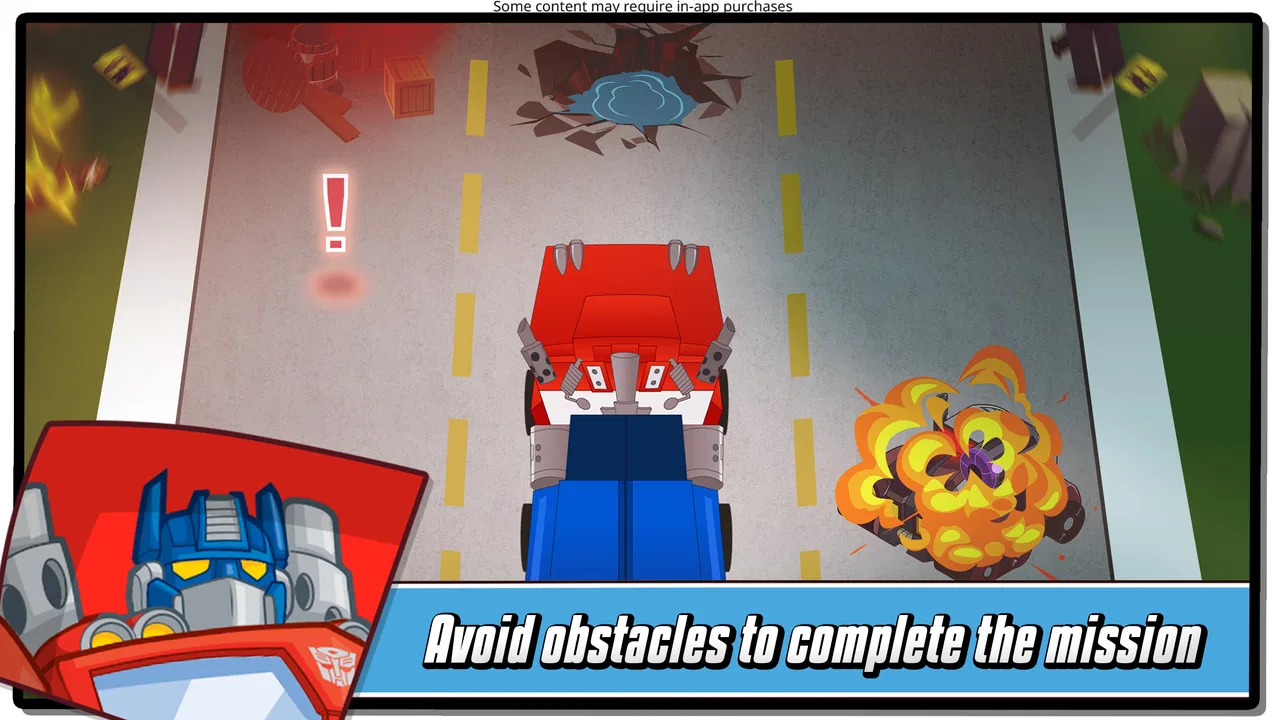
The key capability here is the way the game turns familiar disaster situations into small, readable missions. Fire, snow, and civilians in danger provide an immediate reason to act. I never felt that I needed to understand complicated story history before starting. The objective is clear enough for a child to grasp: look at the problem, use the rescue-oriented action, and keep moving.
That simplicity is useful, but it is not empty. A child has to connect the visual problem with an appropriate response. Flames call for firefighting, an avalanche creates an escape challenge, and a civilian rescue asks the player to pay attention to safety rather than merely rushing toward the most exciting animation. The real strength is the connection between observation and action. The game gives the Transformers theme a practical purpose instead of using the characters only as decoration.
I also like that the rescue framing makes the title easier to share with a parent or younger sibling. A grown-up can ask, “What needs help first?” or “How will you get that person out?” without turning the session into a lesson. The conversation naturally follows what is happening on screen. That is a better fit for short family play than an adventure that depends on complex controls, long dialogue, or a large amount of reading.
How the missions feel in practice
In use, the game works best when I treat each emergency as a short problem to read rather than a race to tap everything. The visual situation tells me where attention should go, and the rescue action gives the scene a clear direction. That makes the first few sessions accessible even for a child who is not already comfortable with mobile games.
The interface is most effective when the player is sitting close enough to see the important details. On a small phone, a younger child may need help identifying what is happening, especially during a busy rescue scene. A tablet is a more comfortable choice for shared play because the action is easier to follow and small hands have more room to interact. I would not call a larger screen essential, but it improves the experience for children who are still developing touch accuracy.
One useful habit is to encourage the player to pause for a moment before reacting. That tiny pause makes the rescue theme meaningful: instead of tapping randomly, the child learns to inspect the emergency and choose a sensible next step. It also reduces frustration when the first attempt does not go as expected. I found that this approach produces better play than giving constant instructions, because the player starts noticing the visual cues independently.
A realistic after-school use case
Imagine a child coming home from school with only a short amount of attention available before dinner. This is where the game makes sense. A parent can hand over the phone or tablet for a brief rescue session, then ask the child to explain which emergency appeared and how it was handled. The action is immediate enough for a short break, and the rescue theme gives the session a natural stopping point.
It is also a reasonable choice for a younger player who finds traditional action games too aggressive. The Transformers identity may suggest battles, but the experience I had was more about responding to danger and helping people. That distinction matters for families looking for recognizable characters without making combat the main attraction.
For a group of children, the game can work as a turn-taking activity, although it is not the same as a dedicated multiplayer experience. One child can handle the controls while another identifies the emergency or suggests what to do next. This creates a simple cooperative conversation, but parents should understand that the cooperation comes from sharing the device, not from a built-in team mode.
Small decisions that improve the experience
My first practical tip is to let the child attempt a rescue before explaining the answer. The situations are clear enough to invite discovery, and immediate adult intervention can turn a game into a set of instructions. If the player gets stuck, a question such as “What is the biggest danger here?” is more useful than taking over the screen.
A second tip is to use the game as a recognition exercise. Ask the player to identify the emergency before touching the screen, then compare that prediction with the action that follows. This makes the rescue capability more than a sequence of taps. It encourages attention to context, which is the part of the design I found most valuable.
A third tip concerns device choice. If a child often misses touch targets or becomes upset by accidental taps, moving from a small phone to a tablet may help more than repeating the same mission. The game’s basic idea is accessible, but the physical size of the screen can affect how confidently a young player performs the rescue actions.
The tradeoff behind the simple design
The same accessibility that makes the game friendly to children also limits its depth. Players looking for a long, demanding adventure with elaborate exploration, strategic systems, or difficult puzzles may find the rescue structure too light. I enjoyed the clarity, but I would not choose it as the main game for an older player who wants continuous challenge or a deep Transformers storyline.
There is also a difference between a game that teaches a child to observe and one that offers genuinely complex problem solving. This title leans toward the first. The player is encouraged to notice danger and respond, but the decisions are designed to remain manageable. That is appropriate for the intended audience, yet it means the novelty may fade for children who quickly master the basic rhythm.
The free entry point is welcome, but families should pay attention to the commercial side. The game includes in-app purchases ranging from $0.99 to $29.99 per item. I would set up purchase protections before handing the device to a child, particularly because a free download can make the game feel risk-free at first. The safest routine is to decide in advance whether purchases are allowed and keep control of them with the adult.
Another tradeoff is the age rating. Everyone makes the game easy to consider for a family library, but it does not mean every child will have the same experience. A preschooler may still need help with the controls, while an older child may want more complexity. The rating describes broad suitability; it does not replace watching how a particular child responds to the pace and repetition.
How it compares with other children’s adventure games
Compared with a typical platform adventure, this game places less emphasis on jumping through levels or collecting items and more emphasis on resolving emergencies. That makes it a better match for a child who likes clear objectives and rescue stories, but a weaker match for someone who wants exploration and movement to be the main reward.
Compared with children’s combat-focused superhero games, it is gentler in spirit. The excitement comes from putting out a fire, escaping an avalanche, or helping civilians rather than defeating a line of enemies. I would choose this one when the child is interested in heroic roles but the family wants the action framed around assistance and safety.
Compared with open-ended creative games, it offers less freedom. A sandbox lets a child invent situations and decide what to build or change, whereas this title gives a more directed emergency and asks for a response. That direction is helpful for a first adventure game, but children who enjoy creating their own worlds may move on quickly.
In other words, its best comparison is not with a large console-style Transformers adventure. It is closer to a guided mobile rescue activity wearing a recognizable robot theme. Once I viewed it that way, the design choices made more sense: short, understandable situations are more important than a huge world or complicated progression.
Who gets the most from it
The strongest audience is a young Transformers fan who enjoys helping characters, can follow simple visual instructions, and wants a game that begins quickly. It is especially suitable for short sessions, shared play with an adult, or a first step into adventure games. The rescue theme gives parents an easy way to talk about what the child is doing without interrupting the fun.
It can also suit families that want a free starting point before spending money on a larger children’s game. Since the download costs nothing, it is practical to try the basic experience first. The important follow-up is managing the available purchases rather than assuming the initial price tells the whole story.
I would skip it for a child who dislikes repetition, expects a substantial story, or prefers building and experimenting without an assigned objective. I would also look elsewhere for an older Transformers fan who wants serious combat, detailed customization, or a more demanding adventure. The recognizable brand may attract that player, but the gentle rescue format is aimed at a younger and less demanding audience.
What I would check before installing
Before installing, I would check the device’s operating system because the game requires Android 5.1 or later. I would also decide whether the child will play alone or with supervision. Independent play is possible for a child who understands the controls, but the best value comes when an adult occasionally asks the player to explain the emergency rather than simply watching taps happen.
I would also make room for the possibility that the game feels more like a collection of guided rescue moments than a single long journey. That is not a flaw if the goal is a quick, friendly activity. It becomes a limitation if the child expects a large adventure that keeps introducing new systems for many hours.
My final view of the rescue approach
After playing it, I see Transformers Rescue Bots: Hero as a focused children’s adventure whose most successful idea is making heroism practical. The player is not merely watching robots perform impressive actions; the player is asked to notice danger and help resolve it. That gives the game a clear identity and makes it easier to recommend for younger children than a generic action title with Transformers characters added on top.
It is not the right choice for deep gameplay, extensive exploration, or older players demanding a difficult challenge. The in-app purchase range also means adults should prepare the device responsibly. Still, for a child who wants short rescue missions, recognizable robots, and a gentle introduction to interactive problem solving, the free starting point is worthwhile. I would recommend trying it on a larger screen when possible, letting the child think before offering help, and treating each emergency as a small chance to practice observation rather than rushing through it.
FAQs for Transformers Rescue Bots: Hero
01What is the main objective of Transformers Rescue Bots: Hero?
Transformers Rescue Bots: Hero is an action-packed game where players control iconic Rescue Bots to save the day. The primary objective is to complete various missions, such as saving citizens, extinguishing fires, and overcoming obstacles, all while transforming between robot and vehicle modes. It's designed for younger audiences, promoting teamwork and problem-solving skills.
02Is Transformers Rescue Bots: Hero suitable for all age groups?
The game is primarily designed for children, particularly those familiar with the Transformers franchise. It features simple controls and engaging missions suitable for ages 6 and up. Parents can feel reassured as the content is child-friendly, focusing on positive themes like heroism and teamwork without any inappropriate material.
03Does the game require an internet connection to play?
Transformers Rescue Bots: Hero can be enjoyed without a constant internet connection. Players can complete missions offline, making it convenient for travel or situations where Wi-Fi is unavailable. However, some features, like updates or additional content, might require internet access to download and install.
04Are there in-app purchases within Transformers Rescue Bots: Hero?
Yes, while the game offers a substantial amount of free content, it does include optional in-app purchases. These can enhance the gameplay experience by unlocking additional characters, missions, or items. Parents should be aware and manage these settings to prevent unauthorized purchases by children.
05What platforms is Transformers Rescue Bots: Hero available on?
Transformers Rescue Bots: Hero is available for both Android and iOS devices. It can be downloaded from the Google Play Store for Android users and the Apple App Store for iOS users. Ensure your device meets the necessary system requirements for a smooth gaming experience.
Pros
- Engaging storyline for young audiences.
- User-friendly controls and interface.
- Colorful and appealing graphics.
- Encourages problem-solving skills.
- Includes beloved characters from series.
Cons
- Limited replay value after completion.
- In-app purchases can be pricey.
- Requires internet for some features.
- May be too simple for older players.
- Occasional minor bugs or glitches.

Transformers Rescue Bots: Hero
Gallery